Great CX is Built Below the Surface
For years, designers have focused on creating intuitive interfaces, seamless flows, and delightful interactions.
But customers don't experience products one screen at a time, they experience entire journeys. Whether they're browsing a website, speaking to support, visiting a store, or using a mobile app, every interaction shapes their perception of the business.
The challenge is that many of the factors influencing those interactions are invisible.
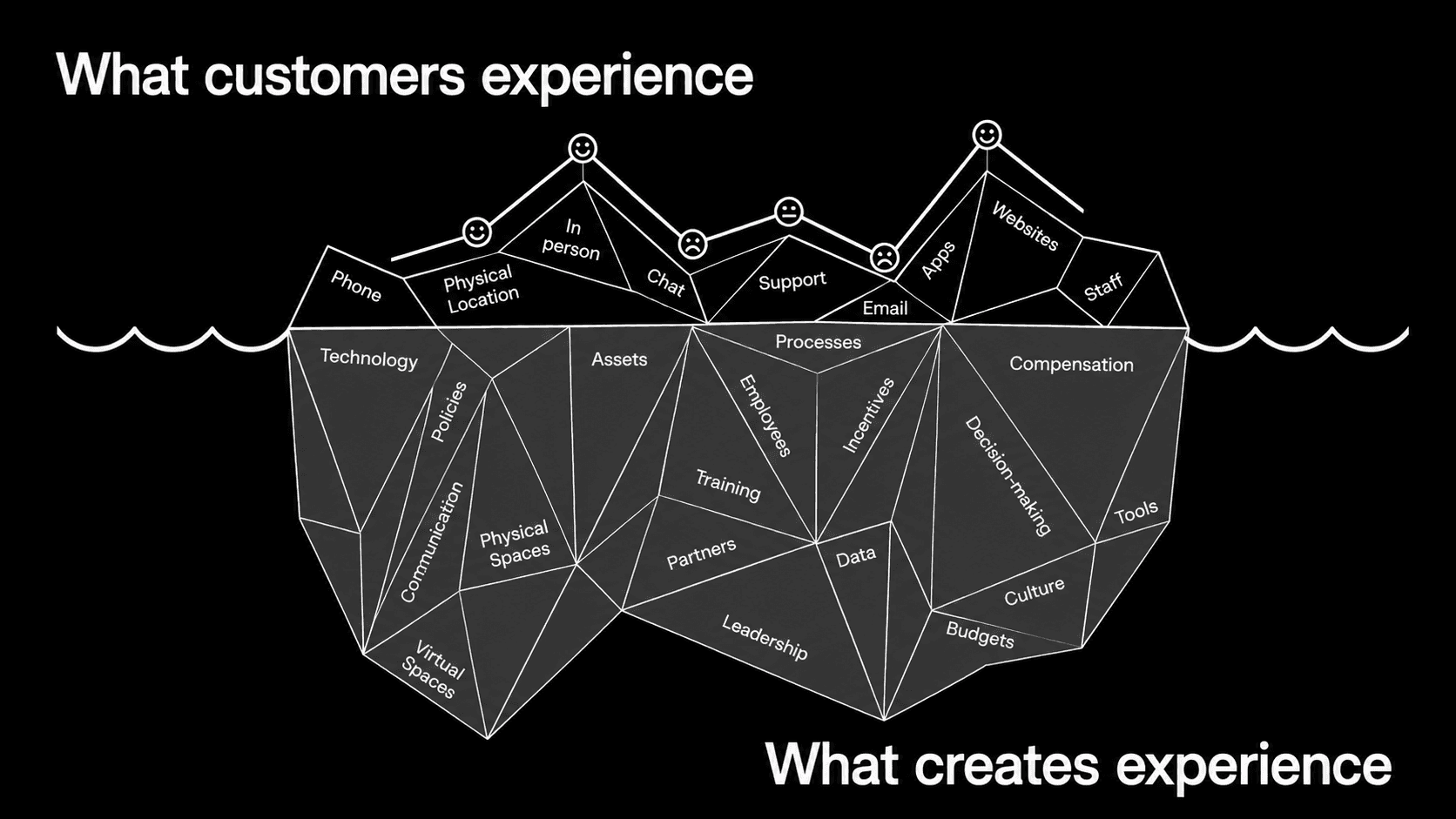
The iceberg beneath every customer experience
Customers only see what's above the surface: websites, apps, emails, support, or conversations with staff.
But underneath lies everything that makes those moments possible: technology, business processes, data, policies, training, culture, leadership, and decision-making. When one of these systems breaks down, the customer feels it, even if they never see it.
A poor support experience might not be caused by bad UX. It could be missing customer data or outdated internal tools.
A confusing checkout flow might actually be the result of business constraints rather than interface design.
Designing the whole experience
This is why UX is less about individual touchpoints and more about understanding the entire ecosystem.
Instead of only asking, "How can we improve this screen?", we should also ask:
Where does this journey begin?
What happens before and after this interaction?
Which teams or systems influence this experience?
Where is context being lost?
Often, the biggest design opportunities exist below the surface.
Final thoughts
I hope this idea really resonates with you:
Customers don't think in channels, they think in goals.
As designers, our job isn't just to create beautiful interfaces. It's to help create experiences that feel connected, consistent, and effortless, regardless of how customers choose to interact with a business.
Because great customer experiences aren't built on a single screen.
They're built beneath the surface.